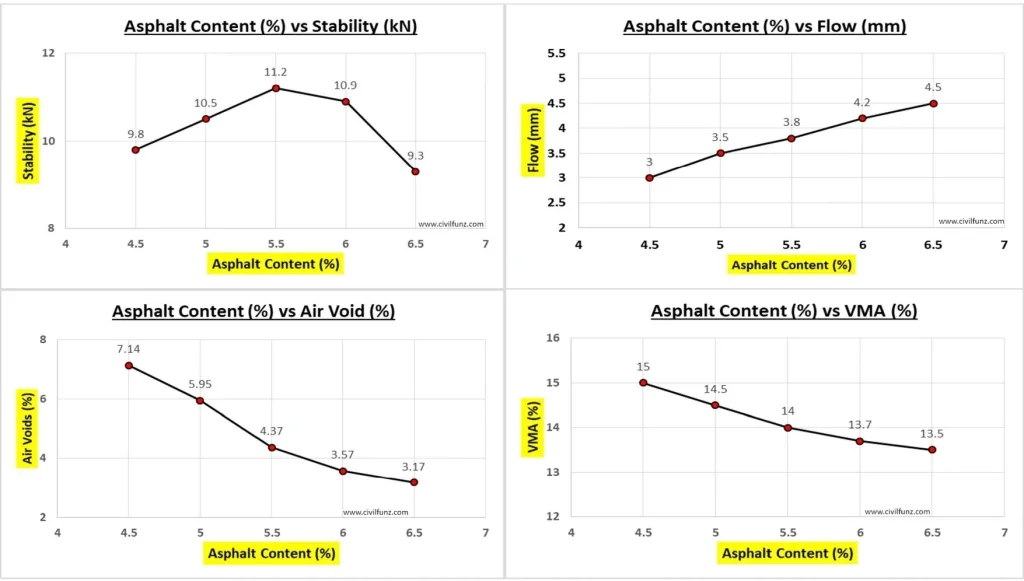
Asphalt mix design is a crucial aspect of pavement engineering, and several methods are used to develop asphalt mixtures tailored to specific project requirements and performance criteria. Here are some of the common types of asphalt mix design methods.
Contents
Common Types of Asphalt Mix Design Methods
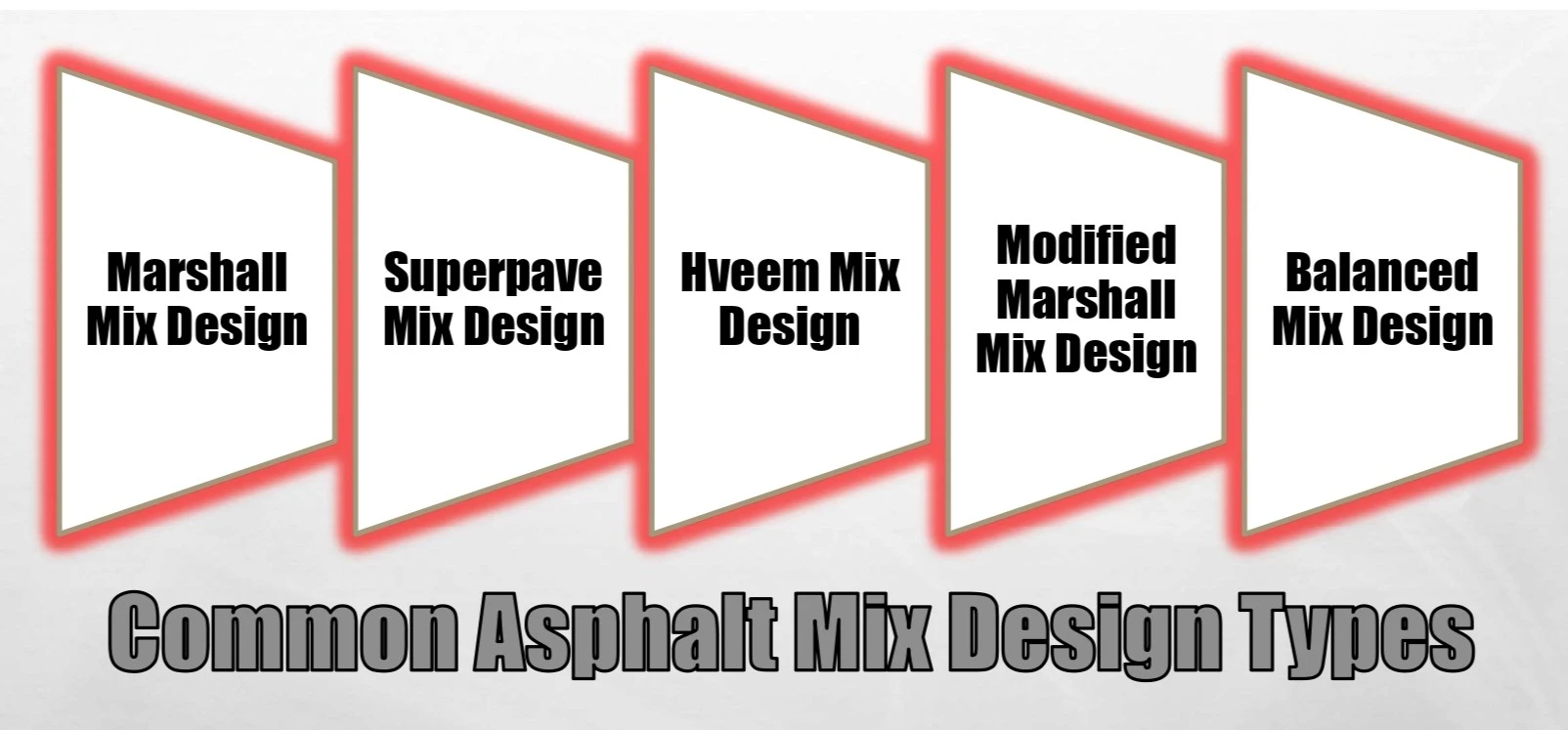
Marshall Mix Design
Developed by Bruce Marshall in the 1930s, this method involves compacting cylindrical specimens of asphalt mixtures at elevated temperatures and evaluating their properties to determine the optimal mix design.
- Objective: Determine the stability, flow, density, and other properties of the asphalt mixture to ensure adequate performance under traffic loads.
- Application: Widely used for designing asphalt mixtures for low to medium-traffic volume roads.
For a step-by-step explanation of the Marshall Mix Design process, read this article.
Superpave Mix Design
Developed by the Strategic Highway Research Program (SHRP), the Superpave mix design method emphasizes performance-based specifications and uses advanced laboratory testing and modeling techniques
- Objective: Develop asphalt mixtures that resist rutting, cracking, and fatigue under a range of climatic and traffic conditions.
- Components: Considers aggregate properties, asphalt binder properties (PG grading), and performance tests (e.g., rutting, fatigue, thermal cracking).
- Application: The standard mix design method is used in many countries to design asphalt pavements.
Hveem Mix Design
Developed by Francis Hveem, this method involves compacting asphalt specimens using a gyratory compactor and evaluating their properties to determine the optimal mix design.
- Objective: Determine the stability, flow, void characteristics, and moisture susceptibility of the asphalt mixture.
- Components: Considers the aggregate structure, asphalt binder content, and compaction characteristics.
- Application: Commonly used in regions where gyratory compactors are preferred for mix design.
Modified Marshall Mix Design
Similar to traditional Marshall mix design but modified to incorporate polymer-modified binders, recycled materials, or other additives to enhance the asphalt mixture’s performance.
- Objective: Develop asphalt mixtures with improved durability, rut resistance, fatigue resistance, or other desired properties.
- Components: These include modified asphalt binders and additives to achieve specific performance enhancements.
- Application: Used for specialty mixtures and applications where conventional mix designs may not meet performance requirements.
Balanced Mix Design (BMD)
A newer approach that balances volumetric properties, performance, and environmental factors in asphalt mix design.
- Objective: Develop asphalt mixtures that achieve specified volumetric properties while meeting performance criteria and sustainability goals.
- Components: Considers aggregate gradation, asphalt binder properties, and performance testing to optimize mix designs.
- Application: Emerging method adopted by some agencies to address sustainability and performance concerns.
These are some common types of asphalt mix design methods used in pavement engineering. Each method has advantages and limitations, and the selection depends on project requirements, available resources, and agency preferences. Using appropriate mix design methods, engineers can develop asphalt mixtures that meet performance requirements, ensure pavement durability, and provide safe and smooth driving surfaces for road users.
Brief Explanation of The Asphalt Mix Design Process:
Asphalt mix design is a comprehensive process of selecting and proportioning the ingredients to produce an asphalt mixture with desired performance characteristics. It involves determining the optimal combination of aggregates, asphalt binders, and additives to achieve the required properties for specific pavement applications.

Project Requirements Analysis
The asphalt mix design process begins with an analysis of project requirements, including:
- Traffic volume and type (e.g., light, medium, heavy)
- Climate and environmental conditions
- Pavement structural requirements (e.g., thickness, subgrade conditions)
- Performance criteria (e.g., rutting resistance, durability, skid resistance)
Aggregate Selection
Aggregates constitute a significant portion of the asphalt mixture and significantly influence its properties. Factors considered during aggregate selection include:
- Gradation: The distribution of particle sizes to achieve optimal packing and stability. (read more about Gradation)
- Shape and Texture: Angular or rounded aggregates affect the mixture’s strength, stability, and frictional properties.
- Durability: Resistance to abrasion, polishing, and weathering.
- Cleanliness: Absence of deleterious materials such as clay, silt, and organic matter.
Asphalt Binder Selection
Asphalt binder is the glue that binds the aggregates together in the asphalt mixture. The selection of asphalt binder is based on:
- Binder Grade: Determines the binder’s viscosity and temperature susceptibility.
- Performance Grade (PG): Indicates the temperature range over which the binder maintains desired properties.
- Additives: Polymer-modified binders may be used to enhance durability, flexibility, and resistance to aging and deformation
Mix Proportioning
Mix proportioning involves determining the optimal combination of aggregates, asphalt binders, and additives to achieve the desired properties. This process considers:
- Aggregate Gradation: Balancing coarse and fine aggregates to achieve optimal packing and stability.
- Binder Content: Determining the optimum asphalt binder content based on the desired mixture properties and performance criteria.
- Air Voids: Controlling the air void content to ensure proper compaction and durability.
- Volumetric Properties: Balancing the proportions of aggregates and binders to achieve the desired volumetric properties (e.g., voids in mineral aggregate, voids filled with asphalt).
Laboratory Testing
Once the mix proportions are determined, laboratory testing is conducted to evaluate the performance characteristics of the asphalt mixture. Common tests include:
- Marshall Stability and Flow: Measures the resistance to deformation and flow at various temperatures.
- Bulk Specific Gravity: Determines the density and void content of the asphalt mixture.
- Hamburg Wheel Tracking: Evaluates rutting resistance under repeated wheel loading and moisture conditions.
- Indirect Tensile Strength: Assesses the tensile strength and resistance to cracking.
Validation and Optimization
The mix design is validated through field trials and performance testing to meet the specified requirements and performance criteria. Based on field observations and feedback, adjustments may be made to optimize the mix design for the specific project conditions
In a brief, it can be said that Asphalt Mix Design is a systematic process that involves careful selection and proportioning of materials to produce asphalt mixtures with desired performance characteristics. By considering factors such as aggregate properties, asphalt binder grade, mix proportioning, and laboratory testing, engineers can develop mix designs tailored to meet the requirements of specific pavement applications, resulting in durable, high-quality asphalt pavements.
Accurate calculation of bitumen percentage using methods like the Ignition or Solvent Extraction Method plays a vital role in ensuring the success of the mix design process.
Keep Reading: Discover More Insights
- Common Road Failures Explained: Causes, Prevention, and Engineering Solutions
- Methods, Best Practices, and Minimum Curing Requirements of Concrete Structures
- How to Check Brick and Brick Chips Quality on Site
- How to Calculate Bitumen Percentage in Hot Mix Asphalt: Methods Explained
- Gradation Curves: Importance in Construction and Step-by-Step Guide with Real-World Examples