bridge engineering

Common Expansion Joints for Bridges

Expansion Joints in Bridges: Types, Functions, and Selection Guide

Expansion joints are pivotal in maintaining the structural integrity and longevity of bridges, accommodating movements caused by temperature variations, traffic loads, and other dynamic forces. This article delves into the importance of expansion joints, exploring their various types—such as finger joints, compression seal joints, and modular joints. Additionally, it provides insights on selecting the appropriate expansion joint based on the bridge type, ensuring optimal performance and durability. Understanding these critical components is essential for bridge engineers and designers aiming to enhance the resilience and functionality of bridge structures.

Expansion Joints in Bridges: Types, Functions, and Selection Guide Read More »
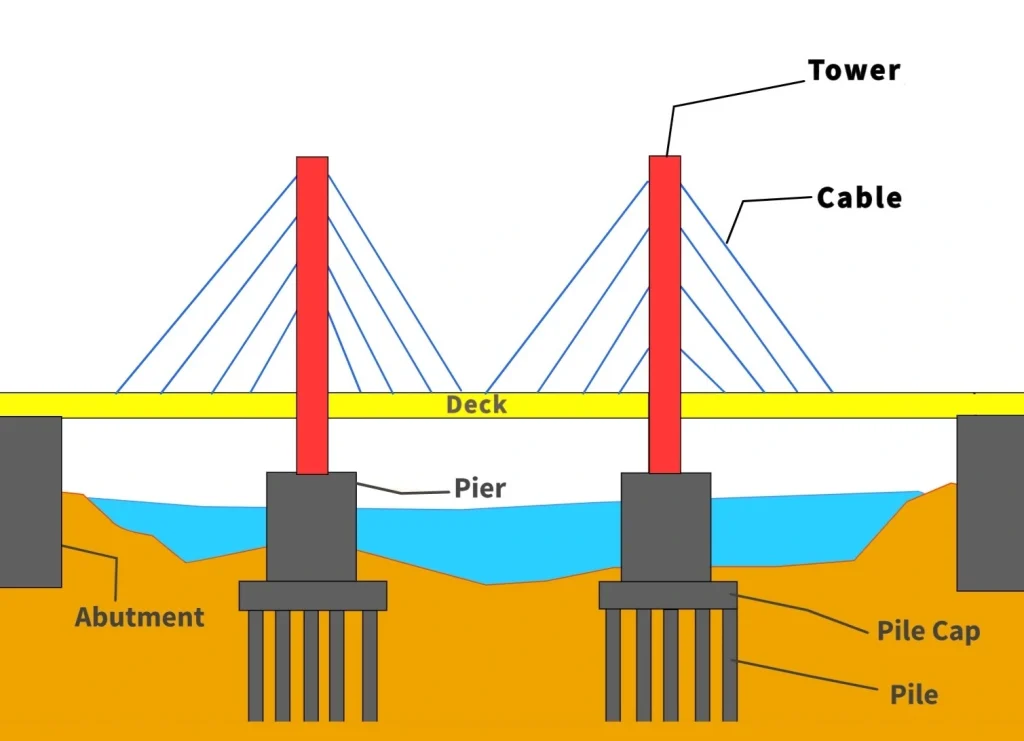
Basic Components of A Typical Cable Stayed Bridge

Know The Differences Between Cable-Stayed and Suspension Bridges

Discover the differences between cable-stayed and suspension bridges – from technical aspects like cable arrangement to practical considerations like construction time and cost. Learn how these factors influence the choice between these two engineering marvels, helping you make informed decisions for your infrastructure projects.

Know The Differences Between Cable-Stayed and Suspension Bridges Read More »

Key Basic Components of A Suspension Bridge

Key Members in A Suspension Bridge and Their Functions

Explore the key members that give suspension bridges their distinctive look while understanding how every member contributes to the bridge’s strength. Besides, we will also answer the common question: How does a suspension bridge handle all that load? We’ll trace the journey from the bridge to the ground, exploring the ingenious ways it manages to take heavy loads.

Key Members in A Suspension Bridge and Their Functions Read More »

Scroll to Top